Folk Notes: In Conversation with Charlie Miller of Dewey's Wines
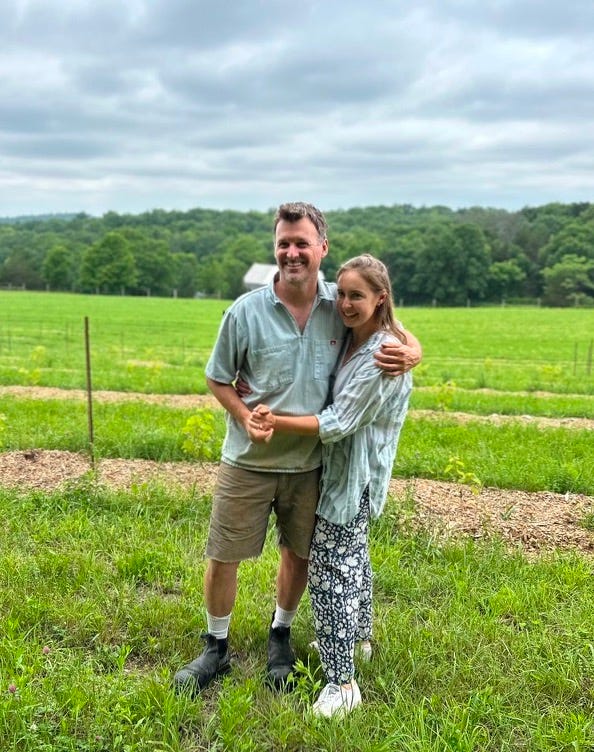
We originally got acquainted with Dewey’s while visiting family back in the Bay Area some years ago— it was a pink-toned label with a wicked abstract graphic that sparked our curiosity…Californian-made vermouth crafted with a base of vermentino and carignan, along with botanicals such as coriander, thyme, wormwood, Californian orange, gentian, and rose, just to name a few. After we opened the bottle we knew we had to find a way to get it in the New York store — little did we know, Charlie Miller and his wife, Emma, who founded Dewey’s Wines in Northern California in 2017, had already made the move across the country. We were in luck!
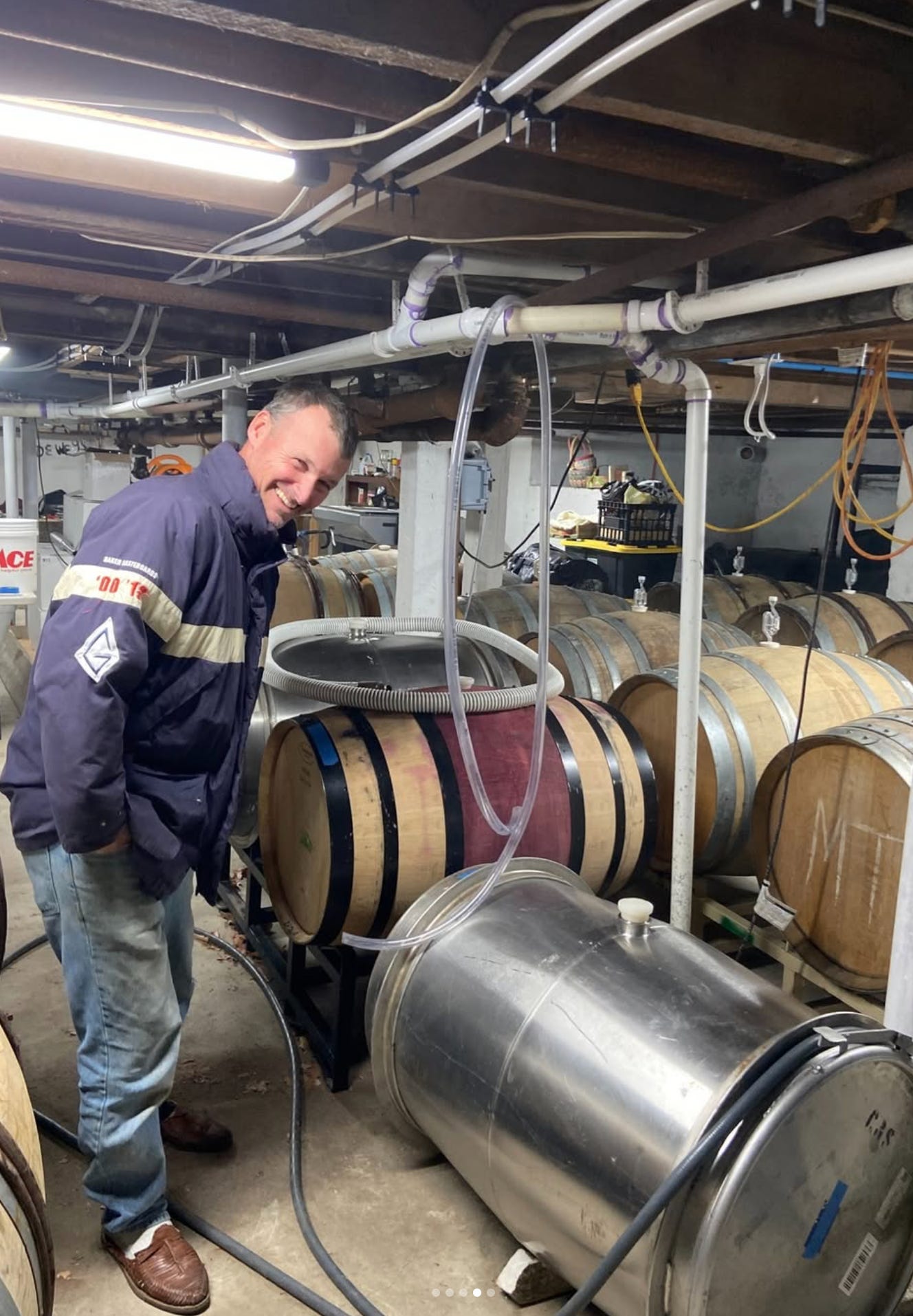
Four years ago, the couple relocated to the Hudson Valley, embracing a new landscape and a new chapter in their winemaking. Since then, Charlie and Emma have immersed themselves in New York’s distinct growing conditions, exploring hybrid grape varieties alongside traditional Vitis vinifera varieties and discovering what this region can uniquely express through wine.
Beyond the vineyard, Emma has also brought her own vision for hospitality to the Hudson Valley as co-founder of Doves Diner, a historic roadside diner in Ancram, New York, that reopened in March 2026 following a thoughtful restoration of the former West Taghkanic Diner. The project reflects a shared commitment to preserving local character while creating a gathering place rooted in food and community.
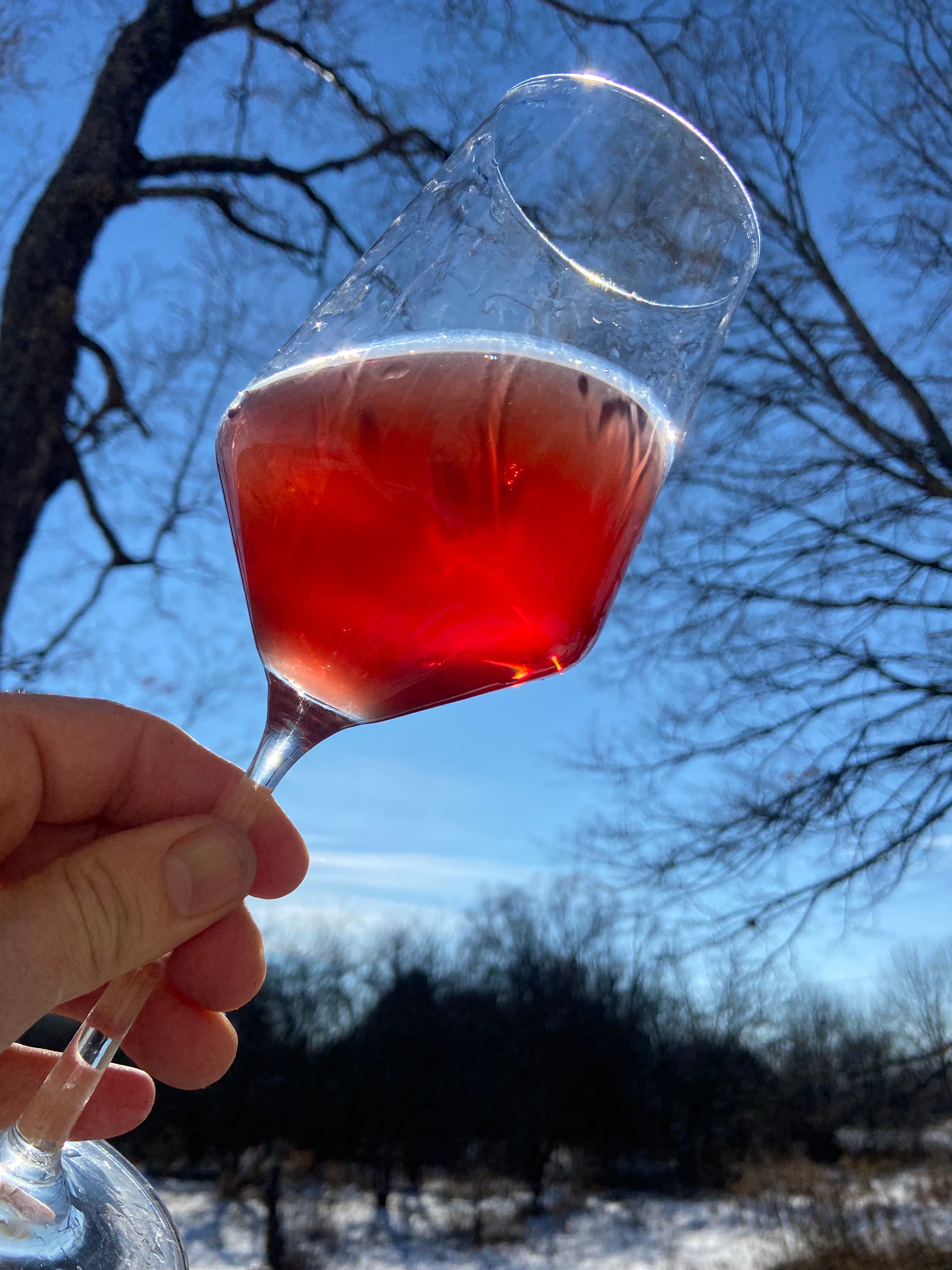
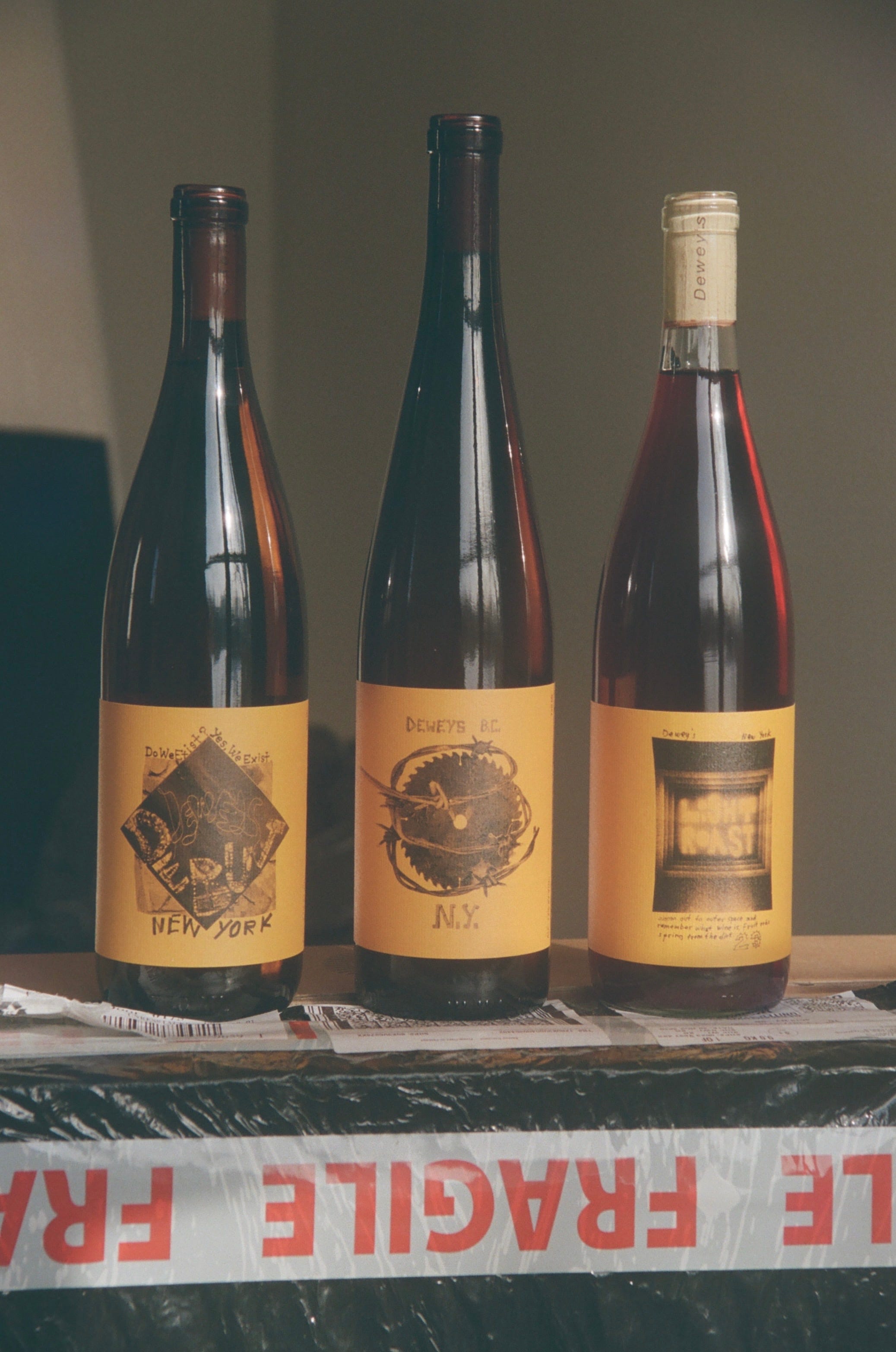
Their first New York releases include the 2022 Debut (Riesling/Chardonnay), 2022 Brush Cutter (Chardonnay/Muscat), and 2023 Light Roast (Merlot)—wines that are fresh, energetic, and unmistakably expressive of this next chapter for Dewey’s.
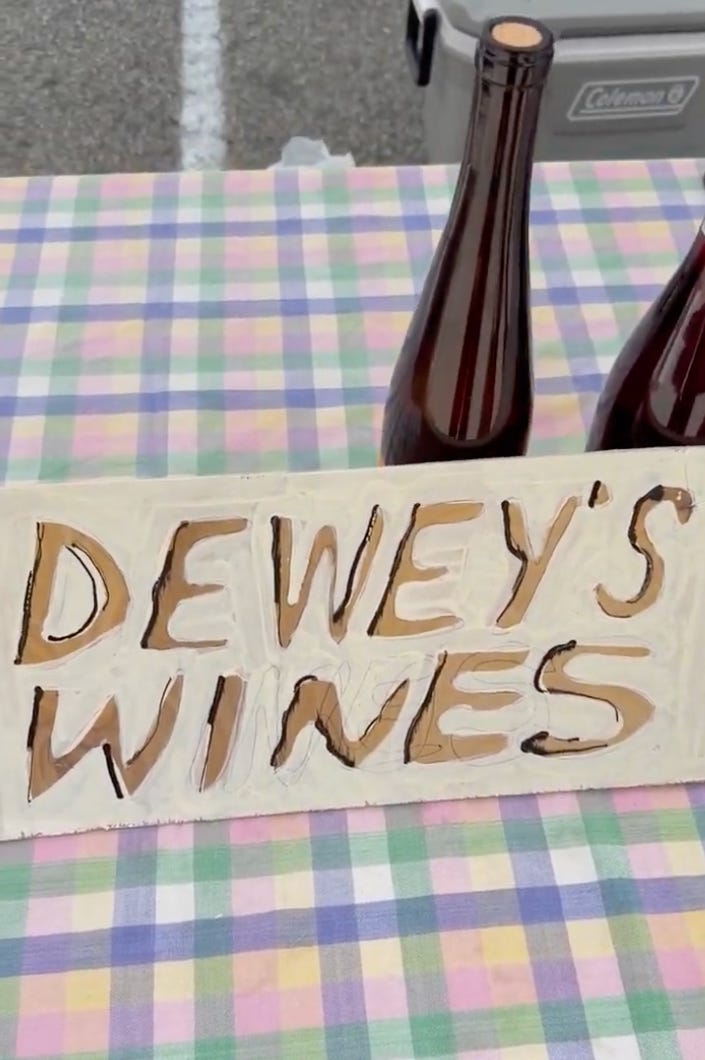
When Natalie sat down with Charlie at the North Salem Farmers Market, the conversation quickly found common ground beyond wine. Having grown up in neighboring parts of California, they shared a familiarity of the Bay Area before discussing what drew them both to the Hudson Valley. Below is an edited conversation exploring his creative process, the promise of hybrid grapes, and what it means to make wine in New York today:
Natalie Marie Gehrels: How did you get into wine? What was your first memory of wine in general? And then when did wine become something you really wanted to do?
Charlie Miller: Growing up in California, my dad had a small hobby vineyard in the yard, very small – maybe two hundred vines or something. I have faint memories of stomping the grapes with my feet, with my brothers, and I can recall very acetic aromas in the garage. It was just his hobby, and I don’t know that he ever made anything drinkable. But it is this nice childhood memory.
Then I went to college for creative writing. Naturally, I graduated, and I had no idea what to do with myself — I was in Colorado and wanted to move back to California, and I found a job in Napa. It sounded like fun working in a winery. I knew nothing about wine, but it was enjoyable, and I didn’t want to be behind a desk.
I figured I would just keep going with it until I got a better idea, and somewhere along the line, I learned that you could go to the Southern Hemisphere and work another harvest, so it became this excuse to travel, and so I just kept doing that, until, you know, I fell in love with it and I was in too deep to do anything else.
I was twenty-six and thought— “I can’t go back to school for enology. That’s insane”. Little did I know, I could have gone to grad school three times over by now.
Natalie Marie Gehrels: Where were you guys living in California before moving to New York?
Charlie Miller: We were living in San Francisco in the Sunset District, and I was making wine for years up in the Sonoma area in Petaluma, working at Cruse Wine Company. Towards the end of that time, I took a job as a winemaker at a small winery called La Honda, a Santa Cruz Mountains winery – we were based in a warehouse in Redwood City.
Natalie Marie Gehrels: Once you were at La Honda, did you decide to start your own project from there?
Charlie Miller: That actually happened while I was at Cruse and Michael Cruse was my boss. He hired me and said, "You know, work for me, and you can make your own wine.” I literally thought he meant you could make one barrel of wine, which is all I wanted to do.
I then started working for him, and he said, “All right, now you have to start an LLC.” It snowballed from there — I asked my then-girlfriend, now wife, Emma, “Do you want to do this with me?” And she said, yes, and then we've just kept at it ever since.
It's really always been a passion project. And Emma, who is a New Yorker, wanted to move back here. I said, "Sure, if we do that, can we go in more seriously on the winery?” So we've been here for four years, and we are working to build out a small production space and a tasting room in our backyard in Germantown, in the Hudson Valley.
Natalie Marie Gehrels: This is the first New York release — are you growing the grapes or are you working towards that?
Charlie Miller: That’s in the works. These are all purchased grapes from the North Fork of Long Island and the Finger Lakes. We planted a vineyard last year, so maybe next year we’ll get some fruit in Rhinebeck. Everything we planted is hybrid. Coming from California, I was a little jaded and too cool for hybrids, and now I’m out here, and I’m wising up.
Natalie Marie Gehrels: What are you growing?
Charlie Miller: A lot of grapes that I’m new to. Everything from Chambourcin, Marquette, Léon Millot, and Regent and to whites: Vidal Blanc, Arandell, and Itasca. There are even a few more out there.
Natalie Marie Gehrels: For people who are not familiar with hybrids and just you yourself being reluctant, could you give people a brief overview? What are hybrids, and how would you compare those new hybrids to traditional varietals?
Charlie Miller: Hybrids were developed in laboratories by human beings. They didn’t evolve naturally in nature, which scares a lot of people. But oftentimes it’s a plant breeder in Alsace one hundred years ago. It’s actually pretty neat and interesting, and these plants were bred to do well in colder climates, in wetter climates. And so, we’ve landed here in New York, where it’s colder and wetter. And there are wineries here that specialize in Pinot Noir, which is insane.
With the wet climate, what I’m really talking about is resistance to fungi—mildew, and whatnot. They say with some of these hybrids, you can spray up to 90% less—or not at all, that’s pretty exciting.
As far as flavor profiles go, they’re different. It’s not Vitis vinifera, you know, people critique them. Everyone references them as “foxy” flavor, which I’ve never been disturbed by. Still, some of the wines can be really high in acid, some can lack acid, so I’m just starting to dip my toe into the hybrid world.
A release we have coming up in the future. They’re all vinifera hybrid blends – so I’m just becoming acquainted. We’ve got a DeChaunac–Cabernet Franc blend and a Cayuga Chardonnay, but I’m excited to get deeper into hybrids and find what works for us.
Luckily, we live in a time where people have more adventurous palates – some of these wines are really bright, not as much body as maybe we’re used to with some vinifera, but they’re delicious. They’re light, they’re fun.
Natalie Marie Gehrels: In speaking about the wines, for people that might be a little bit nervous to try something new, do you plan to present them in the way of blends, without going into the nitty-gritty?
Charlie Miller: That’s something I do think about. Sometimes, I don’t know that we need to list the varieties. I understand people want to know, but I also think when you say this is a hybrid wine, you’re giving people a heads up. I want you to have your expectations set, but it’s not really doing justice to the grapes. It’s better to taste it unknowingly and just appreciate it for what it is.
Natalie Marie Gehrels: I feel that way even just about the term natural wine. When we opened Folkways, we didn’t call it a natural wine store. We wanted to let people come and experience it, and maybe they’ll try something they’ve never had before, and then it’s a new experience for them, and that just allows everybody to be open to the idea.
Natalie Marie Gehrels: Do you design your own labels?
Charlie Miller: I sure do, but I am not a trained graphic designer. I joke that my Photoshop skills might as well be using scissors and construction paper— and that’s kind of what I’m doing.
The idea for the labels was that I would take a piece of plywood and paint the words on it as if it were a giant wine label, photograph it and put that on the label. But it evolved and so, these labels are collages made from physical objects I put together.
The ‘Dewey’s’ is a wire that I sculpted into the name ‘Dewey’s Debut’. That’s a piece of tin that I hammered nails through. There are bricks and masonry on here. This is an old saw blade and a piece of barbed wire. I snipped off a fence, and the name ‘Light Roast’ cut into a piece of poster board. I dipped my hands in a bag of dry concrete, clapped them, the sun shone through, and I photographed it.
Natalie: Is there somebody that you look to and consider them doing really badass work in the wine world?
Charlie Miller: Definitely. I got my start with Michael Cruse. He’s always been an inspiration and hired me for my first harvest in Napa in 2009, and I wound up working for him years later, and he’s a really talented guy.
Then, through working for him, I met this guy, Hardy Wallace. He had Dirty and Rowdy Wine Co., and he’s since mutated into Extra Dimensional Wine Co.Yeah!— he’s incredible.
In New York, Alex and Julia are at Usonia Wine in the Finger Lakes; they’re doing great stuff.
I’ve got to shout out my guy, Ben Ricardi, at Osmote. I make my wine out of his facility, and he’s making incredible pét-nats from hybrids, as well as great still wines. So those are my peoples.
We originally got acquainted with Dewey’s while visiting family back in the Bay Area some years ago— it was a pink-toned label with a wicked abstract graphic that sparked our curiosity…Californian...
more
Vanessa Krough is a non-alcoholic beverages developer, her company Villbrygg highlights Nordic botanicals, as she aims to change wide perceptions of the category.
more
Cabernet Franc is the prettier and wilder Cab- with mountainous ancestors and layered with forest fruit, purple flowers, spice and early depth, shining from the Loire Valley to the Finger Lakes.
more






![Folk Notes: The [real] Beaujolais Nouveau est arrivé!](http://folkwayswines.com/cdn/shop/articles/00a74d5b-ea43-4260-9de3-b044c543883b_9d91a470-9834-4253-adbf-5ad545d54706_320x.jpg?v=1764358852)


